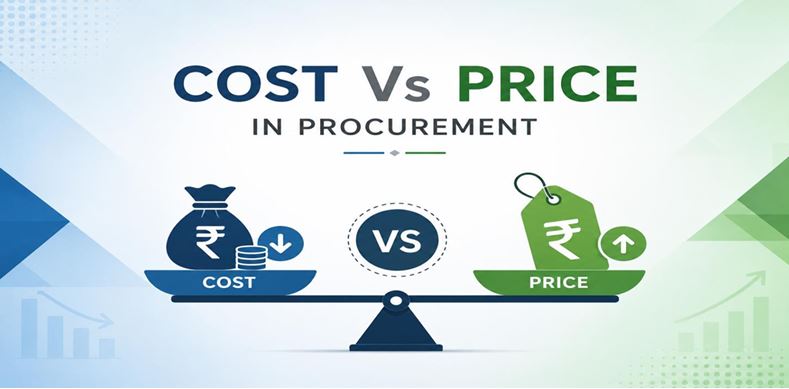
In procurement, price is the specific amount of money paid to a supplier to acquire a product or service. Cost refers to the total financial commitment associated with that acquisition, including hidden or on-going expenses beyond the initial purchase.
The strategic distinction between the two is summarized below:
Core Differences between Cost & Price
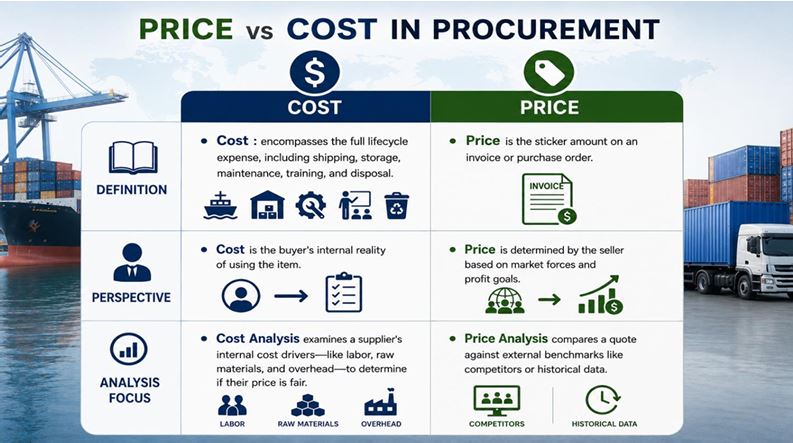
Definition:
- Price is the sticker amount on an invoice or purchase order.
- Cost (specifically Total Cost of Ownership or TCO) encompasses the full lifecycle expense, including shipping, storage, maintenance, training, and disposal.
- Perspective: Price is determined by the seller based on market forces and profit goals, whereas cost is the buyer’s internal reality of using the item.
Analysis Focus:
- Price Analysis compares a quote against external benchmarks like competitors or historical data.
- Cost Analysis examines a supplier’s internal cost drivers—like labor, raw materials, and overhead—to determine if their price is fair.
Why the Distinction Matters
Focusing solely on the lowest price can lead to higher long-term costs. For example, a lowerpriced component with a high defect rate can end up costing an organization more in repairs and downtime than a premium-priced alternative.
| Feature | Price-Focused Procurement | Cost-Focused (TCO) Procurement |
|---|---|---|
| Primary Goal | Minimize upfront cash outflow | Maximize long-term value and efficiency |
| Typical Metrics | Variance from budget or previous price | Lifecycle costs, maintenance, and productivity |
| Negotiation Style | "Tug-of-war" over the final number | Collaborative "should-cost" modelling |
| Risk Level | High (hidden defects, lead-time delays) | Low (transparent and predictable lifecycle) |