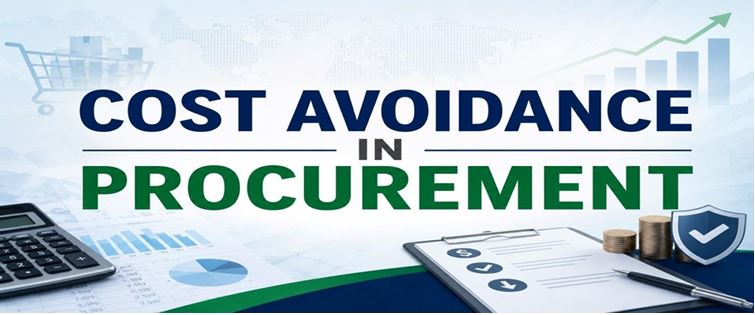
Cost avoidance in procurement refers to proactive measures taken to prevent future price increases or avoid unnecessary expenses. Often called “soft savings,” it does not reduce your current baseline expenses but protects your budget from anticipated hikes and inflation through measures like long-term contract negotiations and process improvements etc.
Cost Avoidance vs. Cost Savings
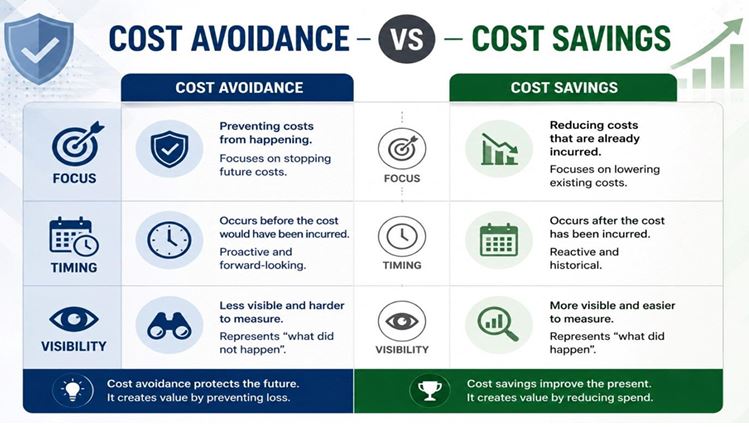
Understanding the difference is a key to tracking procurement’s true impact.
- Cost Savings: Lowers your current spending below what you previously paid. It has a direct, tangible impact on the bottom line (e.g., negotiating a current vendor’s price from rupees 10 to 9.
- Cost Avoidance: Maintains existing spending levels by mitigating potential future increases. It prevents new costs from hitting the budget (e.g., successfully negotiating with a supplier to freeze prices for two years despite a market-wide 10% inflation rate).
| Feature | Cost Avoidance | Cost Savings |
|---|---|---|
| Focus | Preventing future expenses | Lowering current expenses |
| Timing | Proactive (before spending occurs) | Reactive (after spending occurs) |
| Visible | Soft savings that do not appear directly on financial statements | Hard savings that are clearly visible on the profit and loss statement |
Common Strategies
Procurement teams use several techniques to avoid future costs:
- Long-Term Contracts: Locking in current pricing to protect against future market volatility or supplier rate hikes.
- Warranty Negotiations: Securing extended warranties or free maintenance clauses that prevent out-of-pocket repair costs.
- Standardization: Limiting the variety of products or software your company buys, which reduces training, bulk-buying, and operational costs.
- Supplier Consolidations: Leveraging higher volume with fewer key suppliers to waive or avoid setup, shipping, or rush-order fees.
How It’s Measured
Because it represents a cost that never actually occurred, cost avoidance is theoretical and generally harder to quantify than hard savings. Procurement teams usually calculate it using the following formula:
Avoided Cost =Projected Cost of Inaction- Cost of Proactive Solution