The supplier selection process is a strategic procurement framework used to identify, evaluate, and contract third-party vendors. Its primary goal is to minimize purchasing risk, reduce total costs, and secure reliable partners that align with your long-term operational and strategic goals.
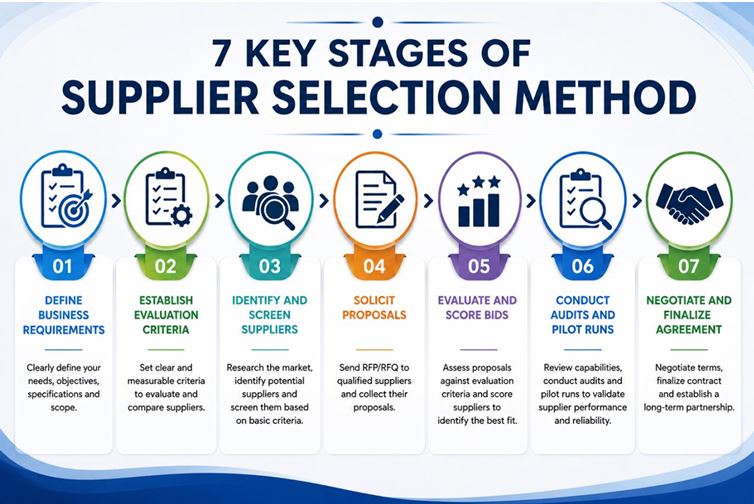
An effective supplier selection process typically involves seven key stages:
Define Business Requirements
Clearly identify what you need to purchase, including product specifications, expected volumes, delivery timelines, and budget ranges. You should also factor in any mandatory compliance or quality standards (e.g., ISO, ESG requirements).
Establish Evaluation Criteria
Determine how you will objectively judge the suppliers. Common criteria include:
- Quality: Consistency, defect rates, and certifications.
- Total Cost of Ownership (TCO): Base price, shipping, hidden fees, and payment terms.
- Financial Health: Credit ratings and risk of bankruptcy.
- Delivery & Reliability: Lead times and historical on-time performance.
- Technology & Service: ERP or AP system compatibility and responsiveness to issues.
Identify and Screen Suppliers
Compile a list of potential vendors through industry directories, trade shows, business networks, and supplier management platforms. Screen them to ensure they have the operational capacity and basic qualifications to fulfil your needs.
Solicit Proposals
Reach out to your shortlisted suppliers by issuing a formal Request for Information (RFI), Request for Quotation (RFQ), or Request for Proposal (RFP). Ask for detailed commercial terms, pricing, and product specifications.
Evaluate and Score Bids
Analyse the proposals using a structured scoring system to ensure quantitative and qualitative fairness. Weigh your selection criteria based on priority, allowing your procurement and operational teams to compare apples to apples.
Conduct Audits and Pilot Runs
Before committing, mitigate risks by conducting comprehensive checks. This can include reference calls, pilot runs for small orders, or on-site facility audits to verify production processes and quality control measures.
Negotiate and Finalize Agreement
Negotiate terms (such as bulk discounts or delivery guarantees) and draft a legally binding contract detailing roles, responsibilities, confidentiality clauses, and dispute mechanisms. Once signed, begin the vendor onboarding process and continuously monitor Key Performance Indicators (KPIs).