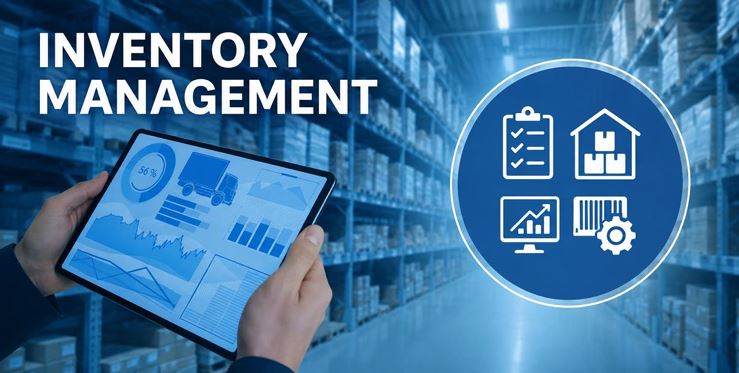
Inventory management is the process of tracking, ordering, storing, and controlling goods throughout a business’s supply chain. The goal of the inventory management is to maintain optimal stock levels to meet customer demand while minimizing holding costs and preventing stock outs.
What are the core inventory types?
- Raw Materials: Raw materials are those basic materials from which components, parts and products are made.
- Work-in-Progress (WIP): Work-in-Progress comprises items that are in a partially completed condition of manufacture. Raw materials become work-in-Progress at the end of first operation and remain in that classification until they become finished parts or finished goods.
- Finished Goods: Finished goods are the final products, ready to be shipped.
What are common Inventory Management strategies?
The common methodologies or strategies of inventory management are:
- Just-In-Time (JIT): Just-in-Time (JIT) inventory is a management strategy where companies receive raw materials or goods from suppliers exactly when needed for production or sales, rather than stockpiling them. The goal is to minimize carrying costs, eliminate waste, and increase overall operational efficiency.
- Economic Order Quantity (EOQ): It is an inventory management formula used to determine the ideal order size a business should purchase to minimize total inventory costs, including holding, ordering, and shortage costs.
- The mathematical formula for Economic Order Quantity is:
Where:
- D: Annual demand (the number of units sold per year).
- S: Ordering cost per order (fixed costs like shipping, admin, or processing fees; not the cost of the item itself).
- H: Holding cost per unit per year (costs to store inventory, including rent, insurance, and depreciation).
ABC Analysis: ABC analysis is an inventory management technique that categorizes stock based on its overall financial value and importance to the business. It operates on the Pareto Principle (the 80/20 rule) to help businesses optimize inventory levels, prioritize control efforts, and reduce holding costs.
In ABC Analysis items are typically grouped into three classes based on their annual consumption value:
Class A (High-Value): ~10-20% of total items, but account for ~70-80% of total inventory value. These items have high turnover and require strict controls, precise records, and frequent reordering.
Class B (Moderate-Value): ~30% of total items, accounting for ~20% of inventory value. These require moderate control and regular monitoring.
Class C (Low-Value): ~50-60% of total items, but only represent ~5-10% of inventory value. These items have lower demand but high carrying volume, requiring basic, periodic reviews.
FIFO & LIFO: FIFO (First In, First Out) and LIFO (Last In, First Out) are cost accounting methods determining how inventory is tracked and valued. FIFO assumes the oldest stock is sold first, yielding lower Cost of Goods Sold (COGS) in inflating markets. LIFO assumes the newest stock is sold first, reducing taxable income.
Safety Stock: Safety stock is the extra inventory a business holds as a buffer to prevent stock outs. It acts as an insurance policy against unpredictable supply chain delays, unexpected demand spikes, and inaccurate sales forecasts, ensuring your operations run smoothly and customers receive their orders without interruption.
There are other inventory management strategies like VED Analysis (Vital-EssentialDesirable), FSN Analysis (Fast-Slow-Non Moving), XYZ Analysis etc.
What are benefits of Inventory Management?
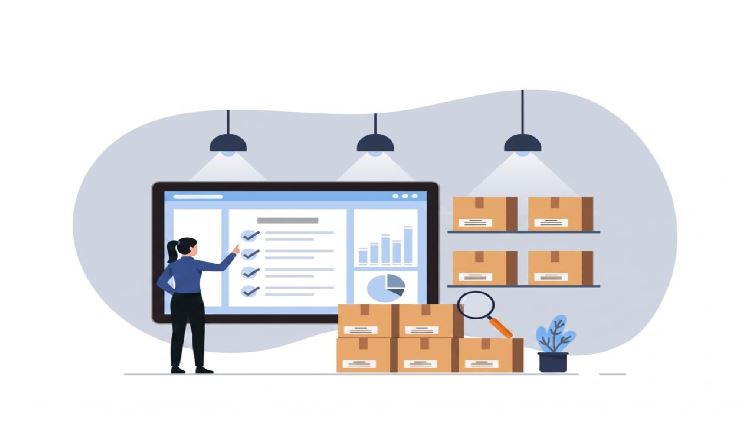
Inventory management optimizes stock levels to meet customer demand while minimizing costs. It ensures you have the right products available at the right time, preventing both stock outs and excess inventory to maximize operational efficiency, bolster cash flow, and improve customer satisfaction. Here are the benefits of inventory management:
- Cost Optimization: Prevents overspending on warehouse storage, reduces carrying costs (insurance, taxes, and handling), and minimizes waste from spoilage or obsolescence.
- Improved Cash Flow: Frees up working capital that would otherwise be tied up in stagnant, unsold goods, allowing you to reinvest in business growth.
- Enhanced Customer Satisfaction: Ensures reliable order fulfilment, timely deliveries, and fewer backorders, building consumer trust and brand loyalty.
- Data-Driven Forecasting: Provides real-time insights into sales trends and seasonal demand, helping you make informed purchasing and supplier decisions.
- Higher Efficiency & Fewer Errors: Streamlines supply chains and eliminates manual tracking, reducing human error and boosting overall workplace productivity.
The Bottom Line
Inventory management is the process of making sure that your company has the right products, in the right amounts, at the right time. If you place order of fewer quantities than required, you may face stock out situation and company may loss the sale. On the other hand if you order excess quantities then that stock will block your inventory, tying up company’s cash flow, and may need to be discounted or discarded later. Since every business is different so there is no one “perfect” way to manage inventory. The key is to choose the best approach according to the business and its products. Getting this right can make a huge difference in company’s profitability.