Procurement tools are digital software solutions that automate and manage the entire lifecycle of acquiring goods and services, from sourcing and requisitioning to contracting and payment.
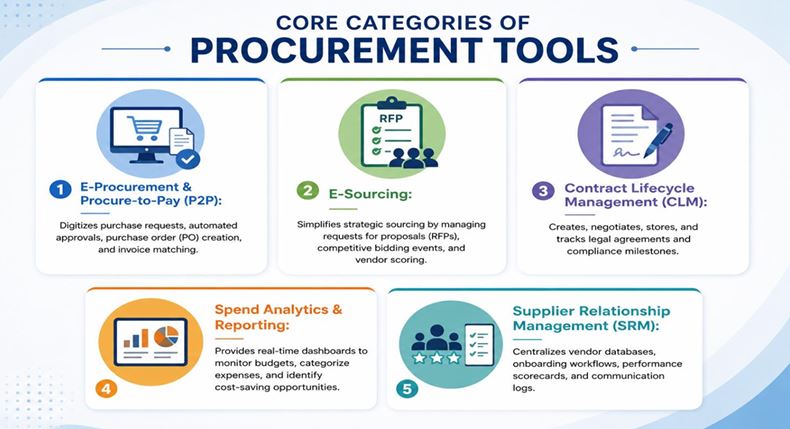
Core Categories of Procurement Tools
- E-Procurement & Procure-to-Pay (P2P): Digitizes purchase requests, automated approvals, purchase order (PO) creation, and invoice matching.
- E-Sourcing: Simplifies strategic sourcing by managing requests for proposals (RFPs), competitive bidding events, and vendor scoring.
- Contract Lifecycle Management (CLM): Creates, negotiates, stores, and tracks legal agreements and compliance milestones.
- Spend Analytics & Reporting: Provides real-time dashboards to monitor budgets, categorize expenses, and identify cost-saving opportunities.
- Supplier Relationship Management (SRM): Centralizes vendor databases, onboarding workflows, performance scorecards, and communication logs.
Key Features of Procurement Tools
- ERP Integration: Connects smoothly with accounting and enterprise systems like SAP, Oracle, or Microsoft Dynamics.
- Real-Time Budget Checks: Prevents overspending by automatically verifying available funds before a PO is issued.
- AI & OCR Automation: Utilizes optical character recognition to read invoices and match them automatically against receipts and POs (three-way matching).
Popular Software Platforms
- Enterprise Suites: Unified platforms like Ivalua, SAP Ariba, and GEP SMART handle complex global supply chains and end-to-end procurement.
- Mid-Market & Growth Tools: User-friendly systems like Precoro and Procurify streamline purchasing and budget tracking for smaller organizations.
- AI-Focused Solutions: Specialized apps like Fairmarkit automate tail-spend sourcing and vendor pricing recommendations using machine learning.
The ultimate value of an audit lies in the actionable insights and corrective actions it produces.