
A supplier scorecard is a structured performance evaluation tool used by procurement teams to objectively measure and monitor vendor reliability. It grades suppliers against predefined Key Performance Indicators (KPIs) like on-time delivery rates, product defect percentages, invoice accuracy, and cost-competitiveness to drive accountability and continuous improvement.
Key Performance Indicators (KPIs)
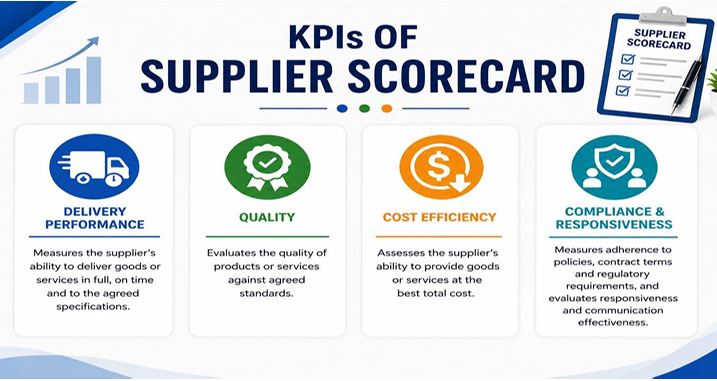
To build an actionable vendor scorecard, customize your metrics based on what matters most for specific supplier categories. Essential metrics typically include:
- Delivery Performance: On-time delivery rate, average lead time, and fulfilment accuracy.
- Quality: Defect-free rate, error rates, and compliance with specifications.
- Cost Efficiency: Price variance against initial quotes, freight costs, and invoice accuracy.
- Responsiveness & Compliance: Communication speed, regulatory compliance, and ESG (Environmental, Social, and Governance) standard adherence.
Benefits of Using Scorecard
Scorecard helps to us find out the best vendors to whom we can give more business. This card also shows us which vendors are causing delays or sending counterfeit material. This helps us to have honest, data-driven talks to fix problems before they hurt the company. The benefits of using the scorecard are as follows
- Risk Mitigation: Identifying downward performance trends (e.g., spikes in defects or late shipments) before they disrupt your supply chain.
- Data-Driven Negotiations: Replacing subjective feelings with objective data to renegotiate better pricing and service-level agreements (SLAs).
- Continuous Improvement: Sharing empirical data with vendors enables collaborative problem-solving and higher overall supply chain quality.
Best Practices for Implementation
- Start Simple: Do not track too many metrics at once. Begin with 3 to 5 core KPIs that directly link to your primary commercial risks and expand as your processes mature.
- Standardize Grading: Use a transparent grading system (e.g., 1-10 numerical scales, or traditional A-F grading) so both buyers and vendors immediately understand the performance level.
- Automate Data Collection: Manually compiling data across multiple departments is tedious. Standardize your evaluations using dedicated frameworks or integrated supplier management software.