The procurement process is the multi-step cycle a business uses to systematically source, order, inspect, and pay for goods and services. It is the strategic, end-to-end process of sourcing, negotiating, and acquiring the goods, services, or raw materials a business needs to operate.
Sourcing and Requisition Stage
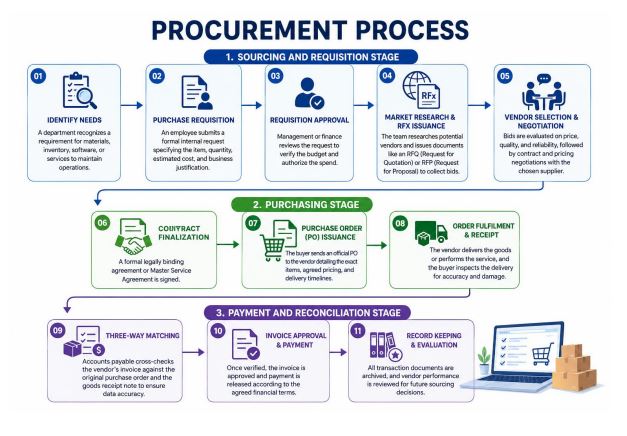
- Identify Needs: A department recognizes a requirement for materials, inventory, software, or services to maintain operations.
- Purchase Requisition: An employee submits a formal internal request specifying the item, quantity, estimated cost, and business justification.
- Requisition Approval: Management or finance reviews the request to verify the budget and authorize the spend.
- Market Research & RFx Issuance: The team researches potential vendors and issues documents like an RFQ (Request for Quotation) or RFP (Request for Proposal) to collect bids.
- Vendor Selection & Negotiation: Bids are evaluated on price, quality, and reliability,
followed by contract and pricing negotiations with the chosen supplier.
Purchasing Stage
- Contract Finalization: A formal legally binding agreement or Master Service Agreement is
signed. - Purchase Order (PO) Issuance: The buyer sends an official PO to the vendor detailing the exact items, agreed pricing, and delivery timelines
- Order Fulfilment & Receipt: The vendor delivers the goods or performs the service, and the buyer inspects the delivery for accuracy and damage.
Payment and Reconciliation Stage
- Three-Way Matching: Accounts payable cross-checks the vendor’s invoice against the original purchase order and the goods receipt note to ensure data accuracy
- Invoice Approval & Payment: Once verified, the invoice is approved and payment is released according to the agreed financial terms
- Record Keeping & Evaluation: All transaction documents are archived, and vendor performance is reviewed for future sourcing decisions.