A procurement audit is a systematic evaluation of an organization’s purchasing operations. It assesses the end-to-end purchasing lifecycle to ensure compliance with internal policies, legal regulations, and industry standards, while mitigating risks like fraud and maverick spending.
To run an organization properly, a company needs to comply with established standards. An ISO procurement audit evaluates the purchasing processes to ensure compliance with standards like ISO 9001 (Quality) or ISO 20400 (Sustainable Procurement). It verifies supplier evaluation methods, controls on external providers, and supply chain transparency.
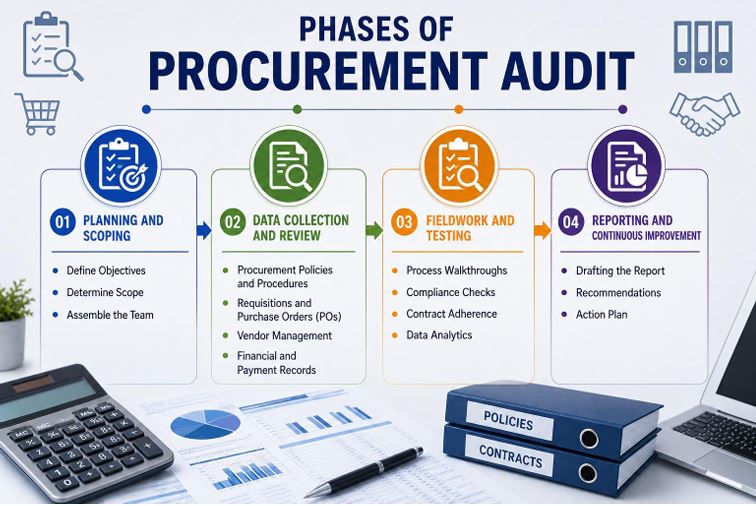
A comprehensive procurement audit is typically structured into four main phases:
Planning and Scoping
Before diving into the numbers, the audit team must establish exactly what is being evaluated.
- Define Objectives: Determine if the audit is focusing on compliance, fraud prevention, cost reduction, or operational efficiency.
- Determine Scope: Identify which departments, vendors, or specific timeframes (e.g., the last fiscal year) will be audited.
- Assemble the Team: Gather internal auditors, procurement experts, and relevant data analysts.
Data Collection and Review
Auditors gather baseline documents to create a clear, factual picture of the procurement environment. Key records collected include:
- Procurement Policies and Procedures: The foundational rules outlining approval workflows and supplier selection guidelines.
- Requisitions and Purchase Orders (POs): Internal requests and official contracts used for sourcing.
- Vendor Management: Supplier profiles, performance evaluations, and active contracts.
- Financial and Payment Records: Invoices, receipts, and accounts payable (AP) data.
Fieldwork and Testing
This is the detective work where auditors test processes against organizational benchmarks and governing rules.
- Process Walkthroughs: Tracing a sample of purchases from the initial requisition right through to invoice payment.
- Compliance Checks: Ensuring that every purchase followed the appropriate Delegation of Authority (DOA) and that there was adequate segregation of duties to prevent fraud.
- Contract Adherence: Checking that vendors delivered goods/services according to the agreed-upon Service Level Agreements (SLAs) and at the correct price points.
- Data Analytics: Using technology to flag duplicate payments, unauthorized vendor relationships, or abnormal spending patterns.
Reporting and Continuous Improvement
The ultimate value of an audit lies in the actionable insights and corrective actions it produces.
- Drafting the Report: Summarize the findings, categorize risks (e.g., operational, financial, legal), and highlight any deviations from policy.
- Recommendations: Provide targeted solutions to eliminate bottlenecks, strengthen internal controls, and improve supply chain efficiency.
- Action Plan: Collaborate with procurement and finance teams to implement a roadmap for change, and schedule future follow-up assessments.