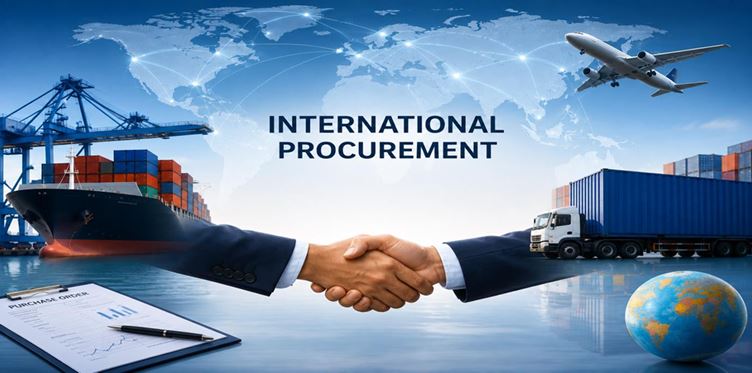
International procurement is the strategic practice of sourcing and acquiring goods, services, or raw materials from suppliers located in different countries to gain a competitive advantage. While traditionally used as a cost-saving measure, it has evolved into a key driver for innovation, supply chain resilience, and market expansion. While it offers access to cost savings and specialized expertise, organizations face critical challenges like currency volatility, complex supply chains, and regulatory compliance issues that require careful planning to mitigate.
Opportunities in International Procurement
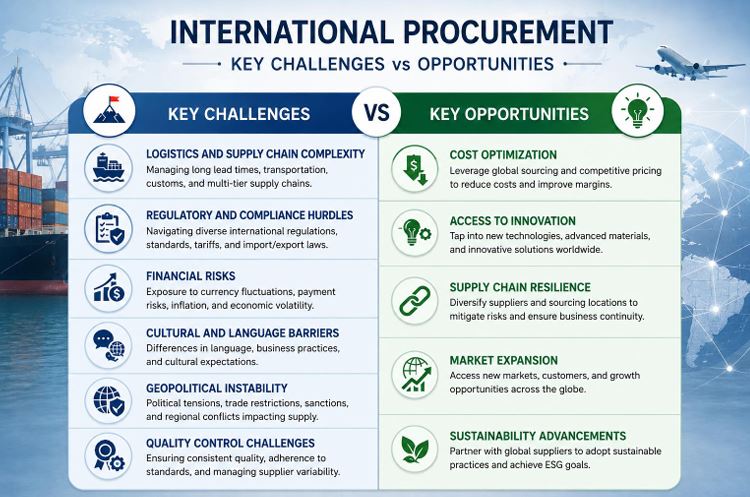
Global sourcing expands a company’s competitive advantage through several strategic benefits. Successfully managing the hurdles unlocks high-value opportunities for growth.
- Cost Optimization: Access to lower labour costs, favourable tax environments, and economies of scale in emerging markets can reduce production expenses by up to 15–25%.
- Access to Innovation: Tapping into global markets allows companies to acquire cutting-edge technologies and specialized expertise not available domestically (e.g., advanced machinery from Germany or electronics from China).
- Supply Chain Resilience: Diversifying suppliers across multiple geographies reduces your vulnerability to localized disruptions like natural disasters or regional economic downturns.
- Market Expansion: Sourcing locally in a target country can help businesses better understand local consumer preferences and lower entry barriers for their own products.
- Sustainability Advancements: Global sourcing provides access to regions rich in renewable resources or specialized eco-friendly production techniques.
Key Challenges in International Procurement
Navigating global markets requires managing complex, cross-border variables that can severely impact the bottom line. Expanding the supply chain across borders introduces several logistical, financial, and cultural complexities.
- Logistics and Supply Chain Complexity: Long-distance shipping often leads to lengthy transit times and unpredictable delays due to port congestion or route blockages.
- Regulatory and Compliance Hurdles: Navigating diverse international trade laws, tariffs, and ever-changing import/export restrictions requires significant legal expertise.
- Financial Risks: Exchange rate volatility can suddenly inflate procurement costs and squeeze profit margins.
- Cultural and Language Barriers: Differences in business etiquette, negotiation styles, and primary languages can lead to critical miscommunications regarding quality or contract terms.
- Geopolitical Instability: Trade wars, political unrest, or sudden sanctions can render entire sourcing regions inaccessible overnight.
- Quality Control Challenges: Maintaining consistent standards is difficult when you lack direct, on-site visibility into a foreign supplier’s operations.