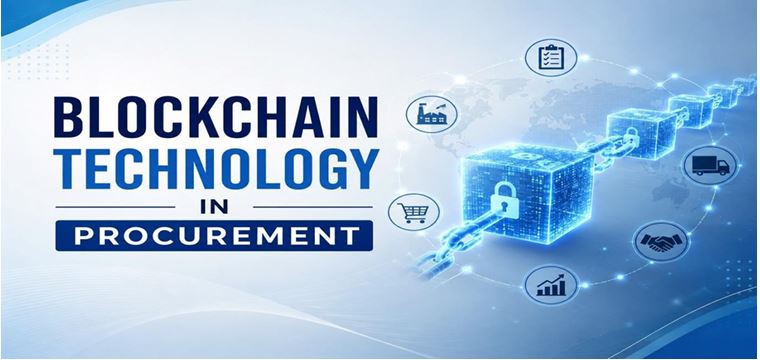
Blockchain in procurement is the application of a decentralized, tamper-proof digital ledger to manage and verify every step of the sourcing and purchasing cycle. It eliminates manual reconciliation by establishing a single source of truth, creating verifiable audit trails, and enabling automated processes.
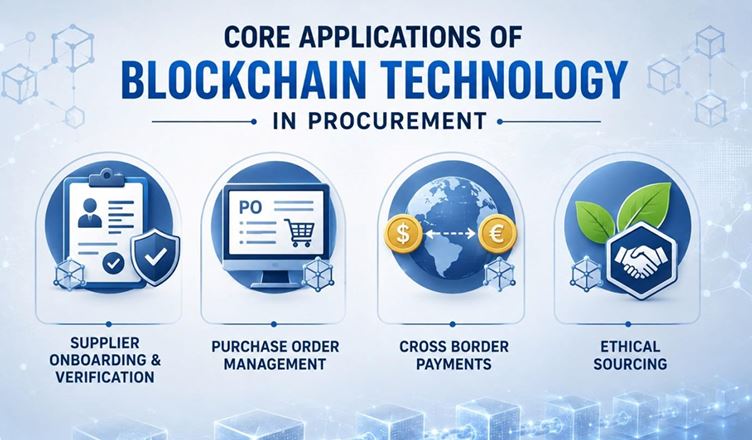
Core Applications
- Supplier Onboarding & Verification: Credentials and certifications are verified once and stored securely, allowing for instant, on-going compliance checks and reducing the time needed to vet new vendors.
- Purchase Order (PO) Management: Shared digital ledgers ensure all parties see the same version of a PO instantly, preventing edits and reducing post-approval disputes.
- Cross-Border Payments: By removing intermediaries like banks and incorporating local tax laws into smart contracts, blockchain enables faster, lower-cost international settlements.
- Ethical Sourcing: Blockchain provides verifiable proof of work and origin, helping companies ensure their supply chains are free from slave labour or environmentally harmful practices.
Key Benefits in Procurement
Blockchain addresses long-standing challenges in transparency, security, and efficiency through several core mechanisms. Here are the key benefits:
- Enhanced Transparency & Traceability: Every transaction—from a purchase order to final payment—is recorded immutably. This allows real-time tracking of goods and verification of their origin, which is critical for industries like food and pharmaceuticals where safety and ethical sourcing are paramount.
- Smart Contracts: These self-executing programs automatically trigger actions (e.g., releasing payments or issuing penalties) once pre-defined conditions, such as delivery confirmation, are met. This can reduce procurement cycle times by up to 30–50%.
- Fraud Prevention: The tamper-proof nature of blockchain makes it nearly impossible to alter records once they are added to the chain, significantly lowering the risk of fake invoices, duplicate payments, and unauthorized data manipulation.
- Real-Time Auditing: Because every action is time-stamped and permanent, auditors can access a unified log in real-time, reducing the effort and resources typically required for manual compliance checks.
Implementation Challenges
- Integration: Merging new blockchain solutions with older, fragmented legacy ERP and procurement systems often requires complex API development.
- Adoption: Achieving success requires widespread buy-in and cooperation across an entire supply chain ecosystem, as well as staff training.