
Total Landed Cost (TLC) is the true, all-inclusive cost to get a product from the supplier to a company’s warehouse. It goes far beyond the supplier’s sticker price to include freight, duties, taxes, insurance, and handling fees. Knowing TLC ensures accurate pricing and protects the profit margins.
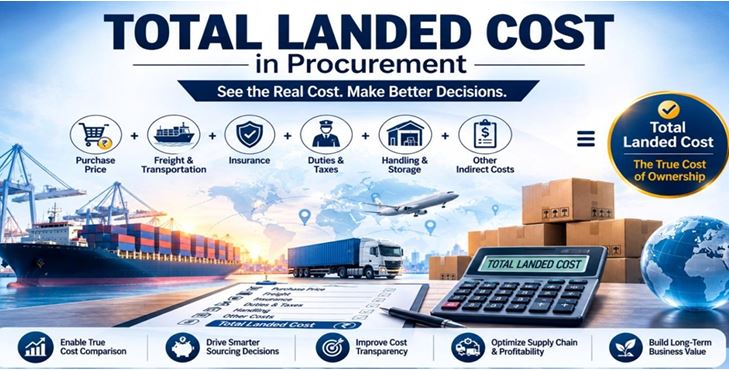
The basic formula to calculate Total Landed Cost is: Total Landed Cost = Product Cost + Shipping Costs + Customs Duties + Insurance + Handling Fees)
Here are all the detailed pieces that make up this total:
- Product Cost: The actual price paid to the manufacturer to buy the raw materials or goods.
- Transportation & Freight: The cost to move items by air, sea, or land. This includes port fees, fuel charges, and inland trucking to your warehouse.
- Customs & Compliance: Fees charged by government agencies. These include import duties, tariffs, and taxes (GST).
- Insurance: The premium paid to protect your goods against loss, theft, or damage during transit.
- Handling & Overhead: Costs for storage, loading, unloading, and using a customs broker. It also covers banking fees or currency exchange costs if you are buying items globally.
The importance of Total Landed Costs
Landed cost analysis plays a crucial role in various aspects of your business operations, impacting several key areas:
- Define Objectives: Determine if the audit is focusing on compliance, fraud prevention, cost reduction, or operational efficiency.
- Determine Scope: Identify which departments, vendors, or specific timeframes (e.g., the last fiscal year) will be audited.
- Assemble the Team: Gather internal auditors, procurement experts, and relevant data analysts.
Data Collection and Review
Auditors gather baseline documents to create a clear, factual picture of the procurement environment. Key records collected include:
- Protects Profit Margins: The base price of a factory item is only part of the story. Ignoring shipping or tariffs can turn a “bargain” into a loss. TLC ensures you earn real money on every sale.
- Improves Pricing: Knowing TLC helps you pick the right sale price. You stay competitive without losing money.
- Guides Smart Sourcing: A cheap supplier might charge high shipping fees. Using TLC lets you compare the actual cost of suppliers.
- Helps with Negotiations: Seeing exactly where money goes helps you negotiate. You can find better shipping routes or ask for bulk discounts.
- Enhances Financial Planning: Accurate TLC stops surprise bills. It gives businesses a clear picture of their financial health.